The Texas Horned Lizard and Its Unique Survival Defenses
Published On April 09, 2026 05:41 PM
Discover how the Texas horned lizard survives with camouflage, body tricks, and its rare ability to shoot blood from its eyes.
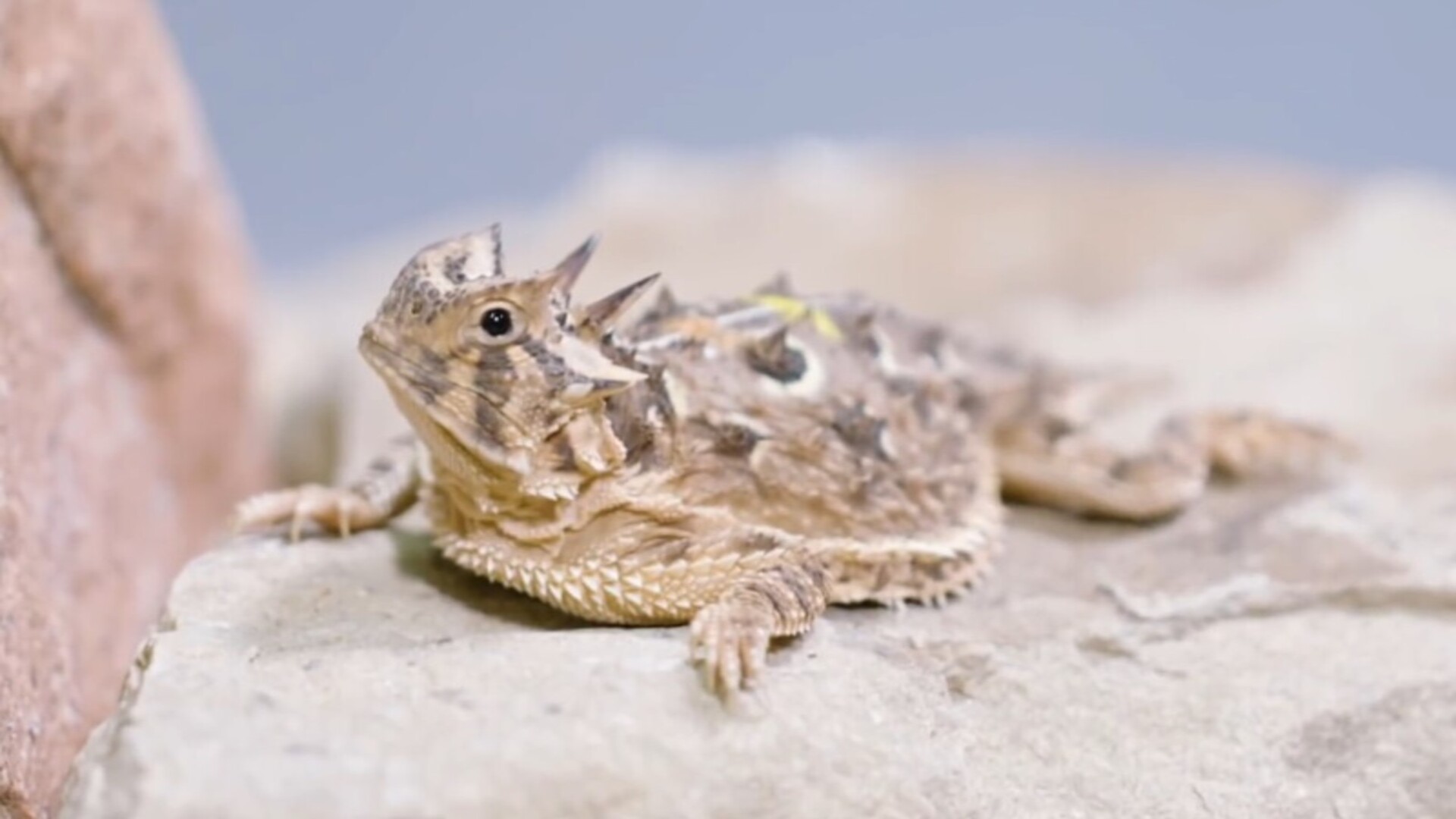
In the dry landscapes of the southern United States lives one of the most unusual reptiles in North America, the Texas horned lizard. Recognized as the official state reptile of Texas, this small but distinctive creature has become a symbol of resilience and adaptation. Its appearance alone sets it apart, with a body covered in sharp horns that give it a prehistoric look. The most prominent of these horns sits at the back of its skull, offering both protection and intimidation against predators. Despite its fierce appearance, the Texas horned lizard is a vulnerable species facing increasing threats in the wild. It relies heavily on camouflage, blending into sandy soils and sparse vegetation to avoid detection. When danger approaches, it can alter its body shape by inflating itself to appear larger or flattening against the ground to disappear into its surroundings. These behaviors make it a master of survival in harsh environments where predators such as snakes, coyotes, and birds of prey are constantly searching for food.
What truly makes the Texas horned lizard extraordinary is its rare and dramatic defense mechanism. When confronted by certain predators, it can shoot a stream of blood from its eyes, targeting the attacker with surprising accuracy. This unusual response is not just startling but also effective, as the blood contains chemicals that can irritate or deter predators, particularly canines. Scientists have studied this behavior as an example of how evolution can produce highly specialized survival strategies. However, even such remarkable adaptations are not enough to protect the species from modern threats. The population of the Texas horned lizard has declined significantly due to rapid urban expansion and habitat loss across its native range. As cities grow and natural environments shrink, the lizard loses access to the spaces it needs to hunt, hide, and reproduce. Conservation efforts are now focused on protecting habitats and raising awareness about the species. The story of the Texas horned lizard highlights the delicate balance between nature and human development, reminding us that even the most well adapted creatures can struggle to survive in a rapidly changing world.