The remarkable survival of the Bactrian camel
Published On May 20, 2026 01:36 PM
The Bactrian camel survives extreme deserts with its two humps, thick coat, and incredible endurance, while wild populations face growing threats.
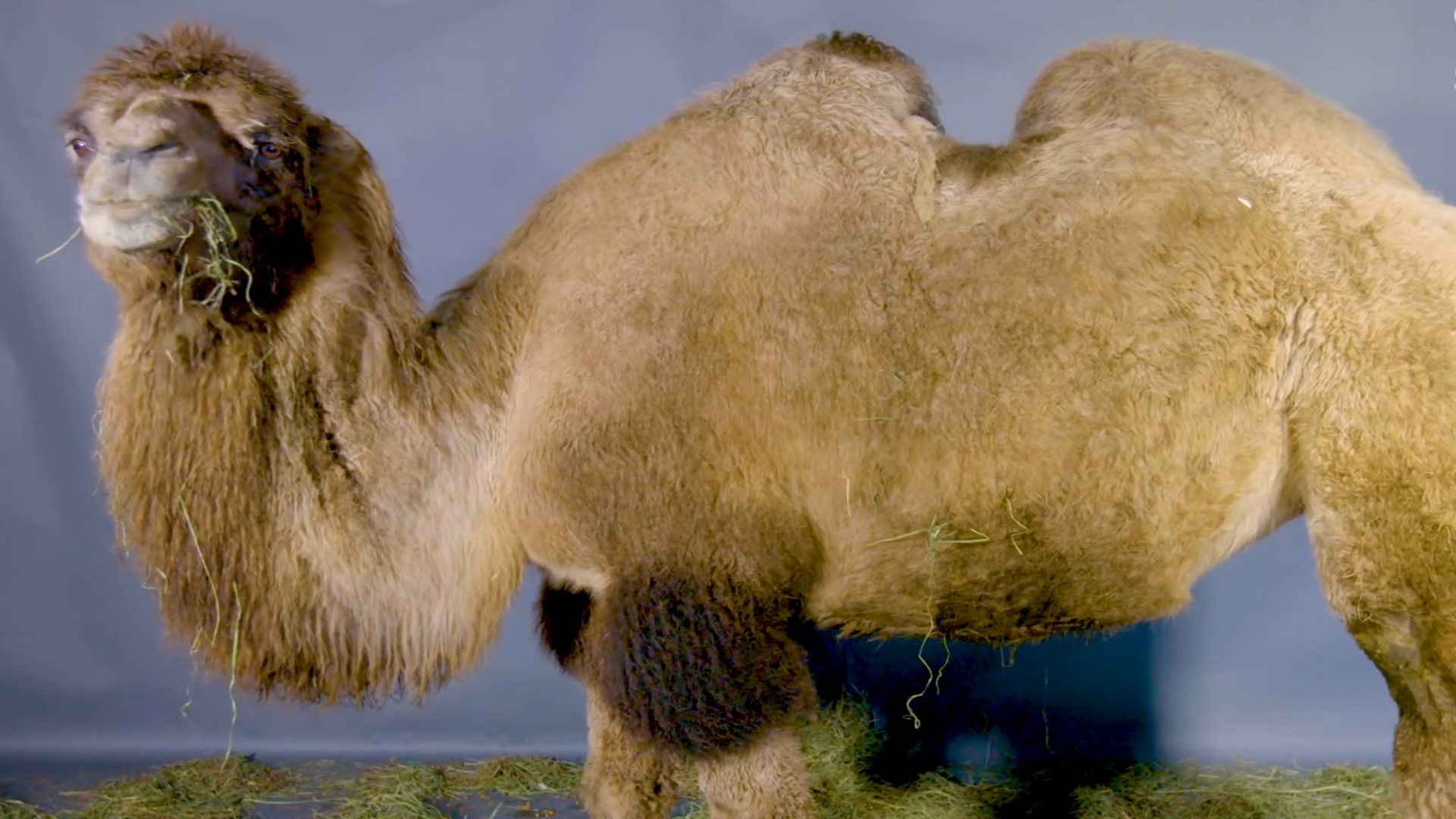
The Bactrian camel is one of the most remarkable animals adapted for survival in some of the harshest environments on Earth. Gemma, a nearly eight foot tall Bactrian camel, represents the largest living camel species and showcases the incredible characteristics that have allowed these animals to thrive for centuries across the cold deserts and steppes of Central Asia. Unlike the more familiar dromedary camel, which has one hump, Bactrian camels are easily recognised by their two large humps rising from their backs. Many people mistakenly believe these humps store water, but they actually contain fat reserves that can be converted into energy whenever food and water become scarce. This biological adaptation allows Bactrian camels to travel across remote landscapes where survival would be impossible for most animals. Their thick woolly coats protect them against freezing winters and intense desert winds, while their strong legs and broad feet help them move efficiently across rocky terrain and sand. Bactrian camels are also highly tolerant of extreme temperatures and high altitudes, making them ideal companions for long journeys along ancient trade routes such as the Silk Road. For centuries, humans have relied on these animals for transportation, carrying goods, and surviving in isolated regions where few other domesticated animals could endure the conditions. Gemma, at fifteen years old, is considered middle aged for her species and demonstrates the strength and endurance that have made these camels so valuable throughout history.
Although domesticated Bactrian camels remain relatively common in parts of Asia, their wild relatives face a far more uncertain future. Wild Bactrian camels are now considered critically endangered due to habitat destruction, hunting, and increasing human activity across their native regions. Scientists estimate that only a small population remains in isolated desert areas of China and Mongolia, where these rare animals struggle to survive against environmental pressures and shrinking habitats. Over the next few generations, experts fear that the number of wild Bactrian camels could decline to only a quarter of their current population if stronger conservation efforts are not implemented. Protecting these animals is especially important because they are genetically distinct from domesticated camels and represent one of the few truly wild camel species remaining on Earth. Conservation organisations and wildlife researchers are working to monitor populations, protect habitats, and reduce illegal hunting in hopes of preventing extinction. Public awareness also plays a significant role in preserving the species, as many people are unaware that wild Bactrian camels are among the world’s most endangered large mammals. Their survival highlights the broader importance of protecting biodiversity and maintaining fragile ecosystems in remote desert regions. Beyond their ecological importance, Bactrian camels continue to capture human fascination because of their unusual appearance, impressive endurance, and historical connection to trade and exploration across Asia. Animals like Gemma help educate people about the species and encourage appreciation for the extraordinary adaptations found in nature.