Santa Cruz del Islote, Life on the World’s Most Crowded Island
Published On April 12, 2026 08:12 PM
Discover how over 1200 people live on a tiny Colombian island, creating a unique community despite limited space and resources.
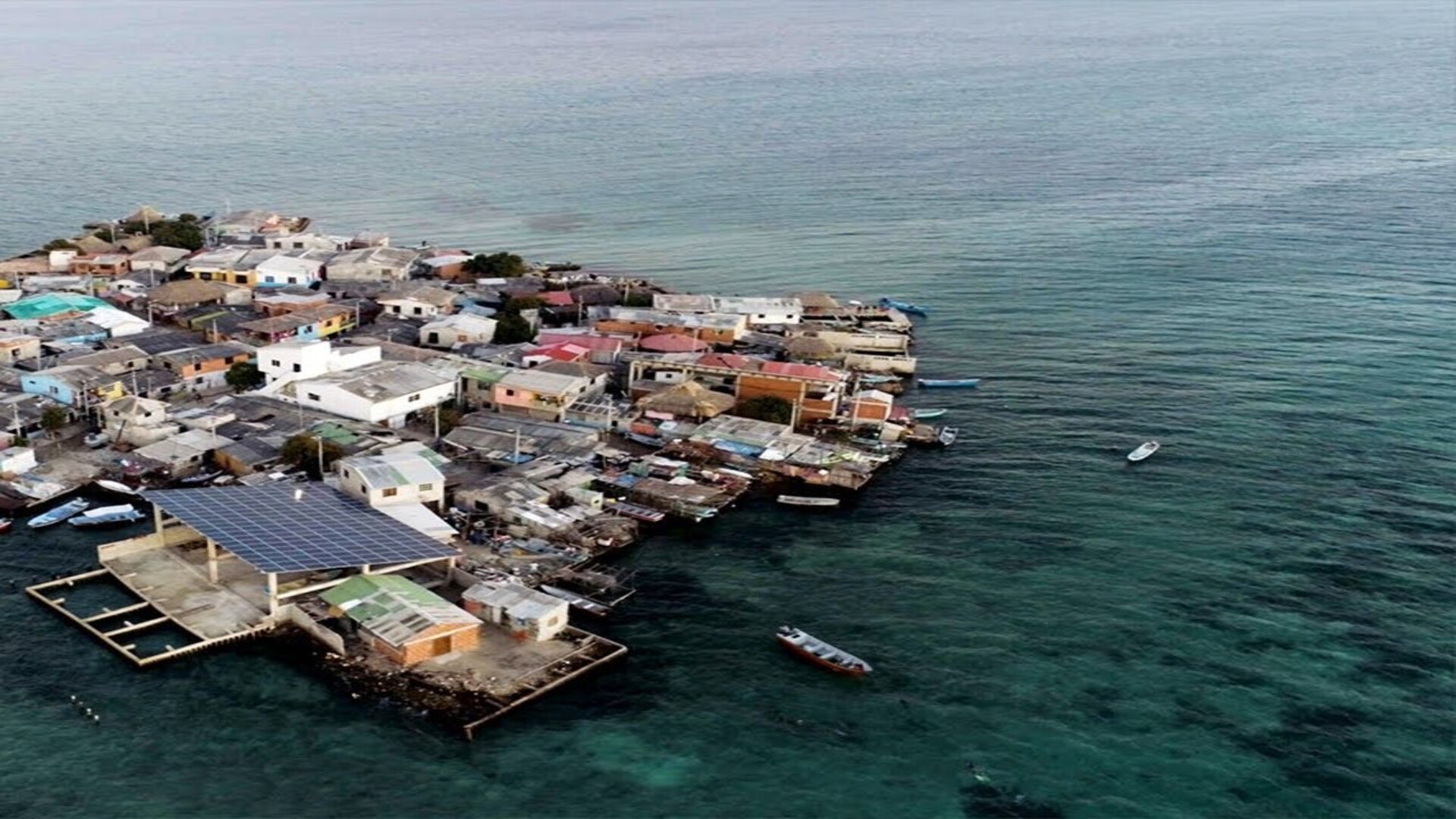
Two hours off the coast of Colombia lies a tiny island that challenges every idea of space and community. Santa Cruz del Islote is often described as the most densely populated island in the world, with more than twelve hundred residents living on land roughly the size of two soccer fields. This makes it far denser than major urban centres like Manhattan. At first glance, the island appears overcrowded, with homes built closely together and narrow pathways connecting every corner. Yet beyond its physical constraints, the island reveals a unique way of life shaped by cooperation and familiarity. Despite limited infrastructure, the community functions with remarkable cohesion. There is a small school that educates children up to the tenth grade, a couple of shops, and a single restaurant that serves as a social hub. Basic services remain limited, with no steady water supply and electricity provided by a generator that runs only a few hours each day. Still, residents have adapted to these conditions, creating systems of sharing and mutual support. What stands out most is the absence of formal law enforcement. In a place where everyone knows one another, social bonds act as the primary form of order and security.
The origins of Santa Cruz del Islote trace back around one hundred and fifty years, when the island was largely uninhabited. Local fishermen began using it as a temporary refuge during storms, drawn by its calm surroundings and safety. Over time, some chose to stay, building simple homes and forming the foundation of the present day community. Generations later, their descendants continue to live on the island, maintaining a strong sense of identity and belonging. Life in such close quarters requires constant interaction, which has shaped a culture centred on relationships and trust. While the lack of space and resources might seem challenging to outsiders, many residents describe their lives as peaceful and fulfilling. The island offers a slower pace of living, where connections between people are valued more than physical comfort. Children grow up surrounded by extended family, and daily life revolves around shared experiences. Santa Cruz del Islote stands as a powerful example of how community can thrive even in the most confined environments. It highlights the idea that quality of life is not defined solely by space or material wealth but by the strength of human relationships and a shared sense of purpose.