Mont Saint-Michel, the island abbey shaped by tides
Published On October 22, 2026 02:53 PM
Explore France’s medieval island abbey transformed by tides, history, and Gothic architecture.
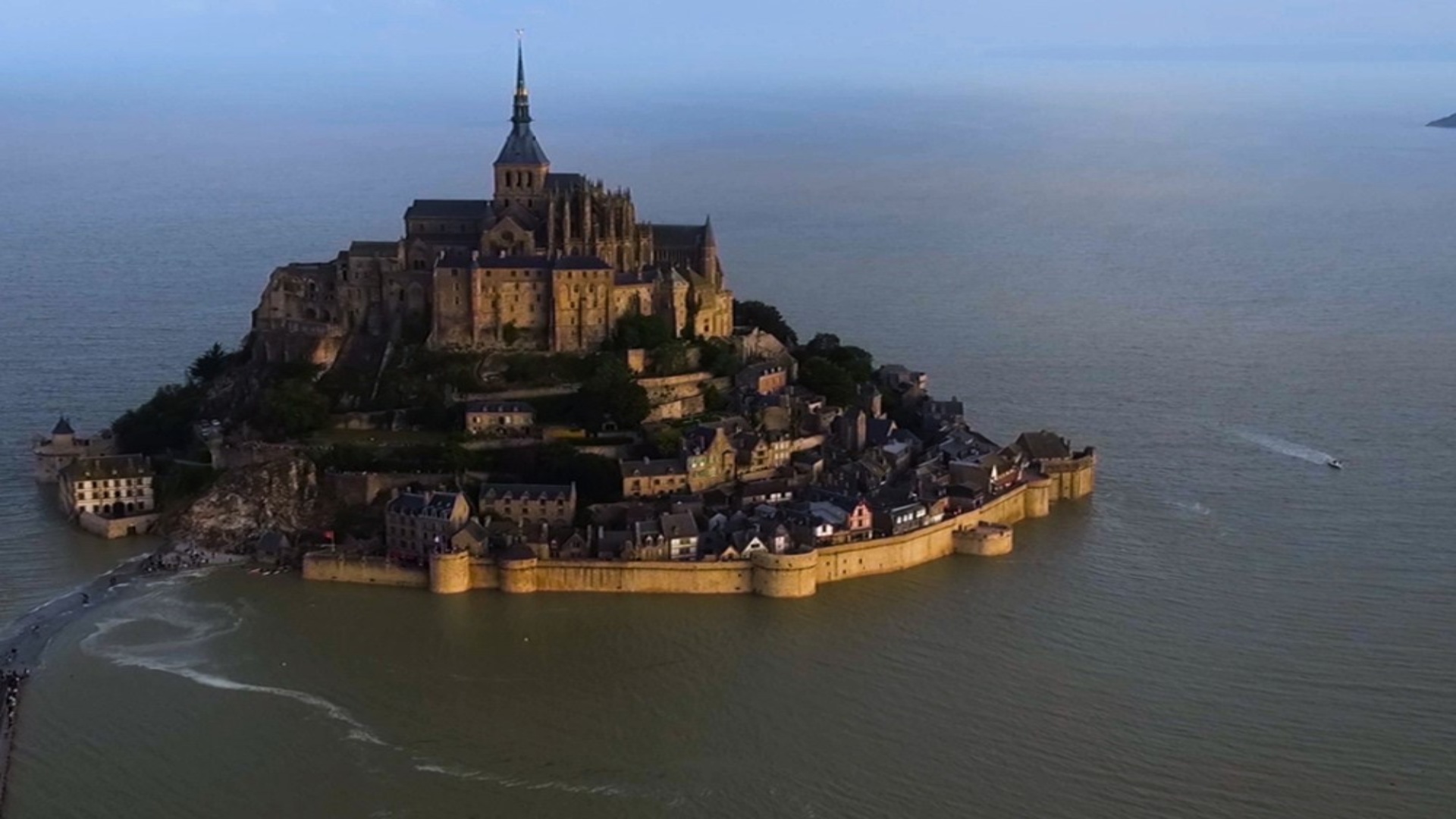
Mont Saint-Michel is one of the most remarkable landmarks in France, a place where nature and human creativity come together in a truly unforgettable way. At one moment, it appears connected to the coastline, and at another, surrounded by rising seawater, it transforms into a mysterious island fortress. No matter the tide, this historic site remains one of the most visually stunning destinations in the world.
Located between the coastal regions of Normandy and Brittany, Mont Saint-Michel rises from the bay with its impressive Gothic-style Benedictine abbey standing at the summit. The abbey was built as a religious sanctuary dedicated to the archangel Saint Michael, a figure who has held great importance in Christian tradition for centuries. Its towering spires, stone walls, and medieval architecture create a breathtaking silhouette that has inspired visitors, artists, and historians for generations.
Although it looks like a natural island that has existed forever, Mont Saint-Michel was not always surrounded by water. During prehistoric times, the rocky formation was connected to the mainland and stood on dry ground. Over thousands of years, natural forces slowly changed the landscape. Rising sea levels and coastal erosion reshaped the area, eventually creating the tidal island that exists today.
The relationship between Mont Saint-Michel and the sea is one of its most fascinating features. The tides around the bay are among the strongest in Europe, causing the surrounding landscape to change dramatically throughout the day. During low tide, visitors can see wide areas of sand around the monument, while high tide can make the site appear completely separated from the mainland.
Despite its enormous popularity, Mont Saint-Michel remains a small community. Fewer than 50 permanent residents live within its historic walls, but millions of visitors arrive every year to experience its unique atmosphere. Tourists travel from around the world to explore its narrow medieval streets, ancient buildings, and breathtaking views across the bay.
Reaching the abbey requires a challenging journey. Visitors must climb around 900 steps through the winding streets and pathways that lead to the top. The climb can be demanding, but the reward is a spectacular view of the surrounding coastline and an opportunity to explore one of Europe’s greatest architectural achievements.
Mont Saint-Michel is far more than a church built on a rocky island. It is a living piece of medieval history that preserves centuries of culture, architecture, and religious heritage. The site represents the dedication and skill of the builders who created a remarkable monument in a difficult coastal environment.
In 1979, Mont Saint-Michel became one of the first monuments recognized as a UNESCO World Heritage Site because of its outstanding historical and cultural importance. Today, it continues to attract millions of people who come to witness its changing relationship with the sea and experience the atmosphere of a medieval world preserved through time.
The beauty of Mont Saint-Michel comes from the perfect balance between nature and human achievement.